
However, when the arteries that carry blood to the legs become narrowed or blocked, this may be peripheral arterial disease (PAD).
This condition can cause pain when walking, a feeling of tiredness in the legs, changes in the temperature or colour of the feet and, in more advanced cases, wounds that do not heal or pain even at rest.
If you have these symptoms, it is important to be assessed by a vascular surgery specialist.
At Berkelium Surgical Group in Barcelona we study each case individually to find out where the arterial problem is, how severe it is and which treatment option is most appropriate.
What is peripheral arterial disease?
It occurs when the arteries that carry blood to the legs become narrowed or blocked, making it harder for blood to reach the muscles and tissues properly.
The most common cause is atherosclerosis, a process in which plaque builds up in the artery walls.
The main factors that can contribute to it include:
- Smoking
- Diabetes
- High blood pressure
- High cholesterol
- Overweight
- Chronic kidney disease
- Older age
- Physical inactivity
- History of cardiovascular disease
Peripheral arterial disease does not only affect the legs. It is also a marker of vascular disease elsewhere in the body and is associated with higher cardiovascular risk. For this reason, diagnosing it makes it possible not only to treat the leg symptoms, but also to assess and control cardiovascular risk factors.
What are the most common symptoms?
Symptoms can vary greatly from one person to another. Some people may have peripheral arterial disease without noticing clear symptoms, while others experience significant discomfort when walking.
- Pain or cramps in the legs when walking (in the calves, thighs, buttocks or feet) and needing to stop for the pain to go away
- Tired or heavy legs
- Cold feet and/or changes in the colour and appearance of the skin
- Pain when lying down in bed
- Wounds that take a long time to heal
Intermittent claudication
This is one of the most common symptoms of peripheral arterial disease.
It usually appears when the leg muscles need more oxygen than the arteries can supply during exercise.
The patient may start walking normally, but after a certain distance pain, cramping, tiredness or a feeling of pressure appears in one leg. On stopping, the discomfort goes away or improves and they can walk again.
Chronic limb-threatening ischaemia
This is a severe form of arterial disease in which the leg or foot receives an insufficient blood supply, and the following may appear:
- Severe pain at rest and at night
- Wounds or ulcers that do not heal
- Necrosis or gangrene
- Significant changes in the colour of the toes or foot
In these situations a prompt assessment by a vascular surgeon is especially important, for early diagnosis and treatment aimed at restoring blood flow through a revascularisation strategy and, where possible, promoting healing and preventing limb loss.
Treatment of peripheral arterial disease
Initial treatment may include measures to control cardiovascular risk factors and medication when indicated.
When symptoms remain limiting despite these measures, a revascularisation technique may be considered to improve blood flow.
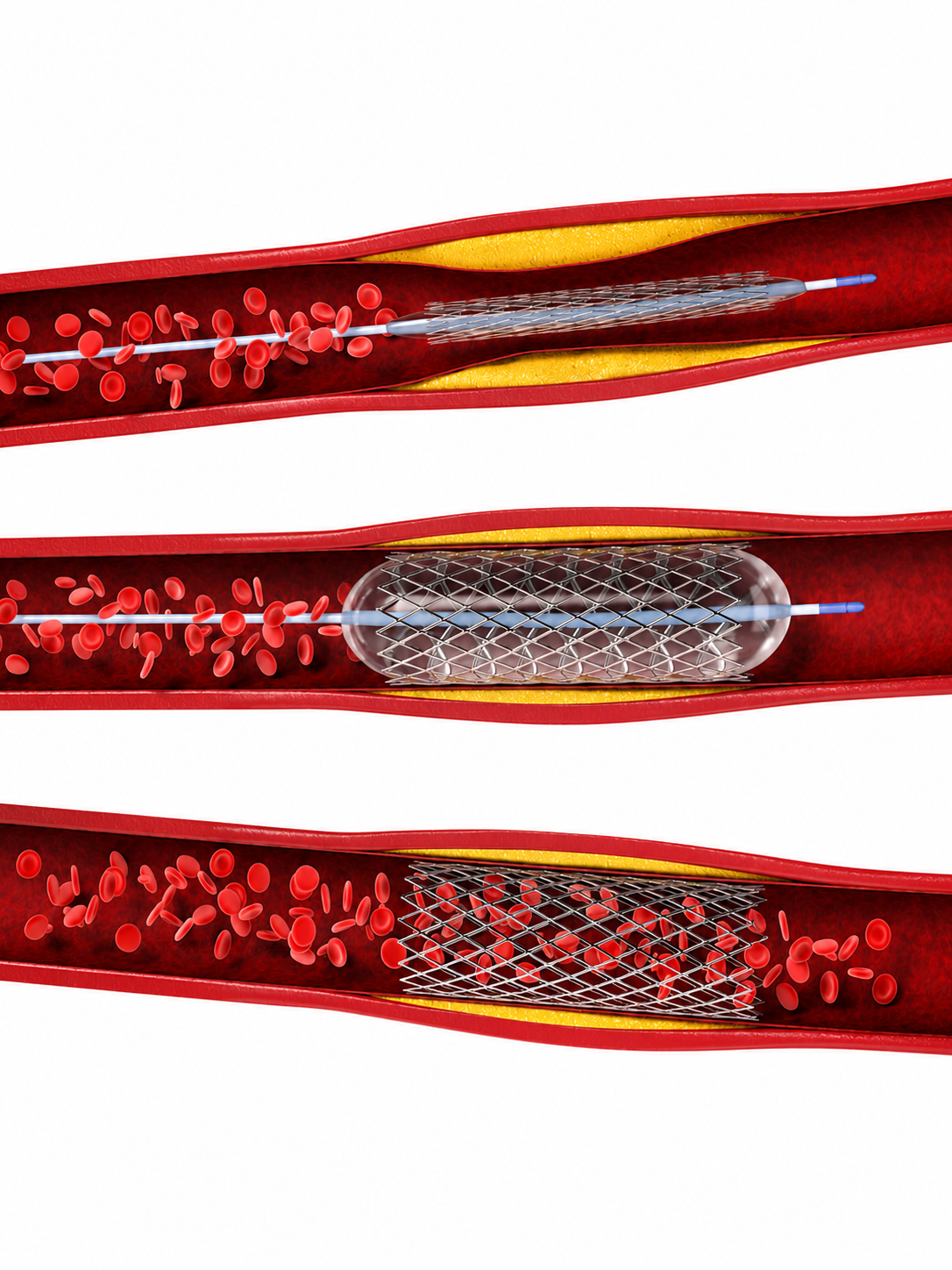
Catheter-based techniques (endovascular treatment)
Angioplasty is a minimally invasive technique that treats a damaged or blocked artery from inside the blood vessel.
A catheter is usually inserted through a small puncture and guided to the affected area. Once there, a balloon can be used to widen the artery and improve blood flow.
In certain situations a stent (a small metal mesh tube that helps keep the artery open) may also be placed.
One of the main advantages of endovascular treatment is that certain lesions can be treated with less invasive techniques than open surgery.
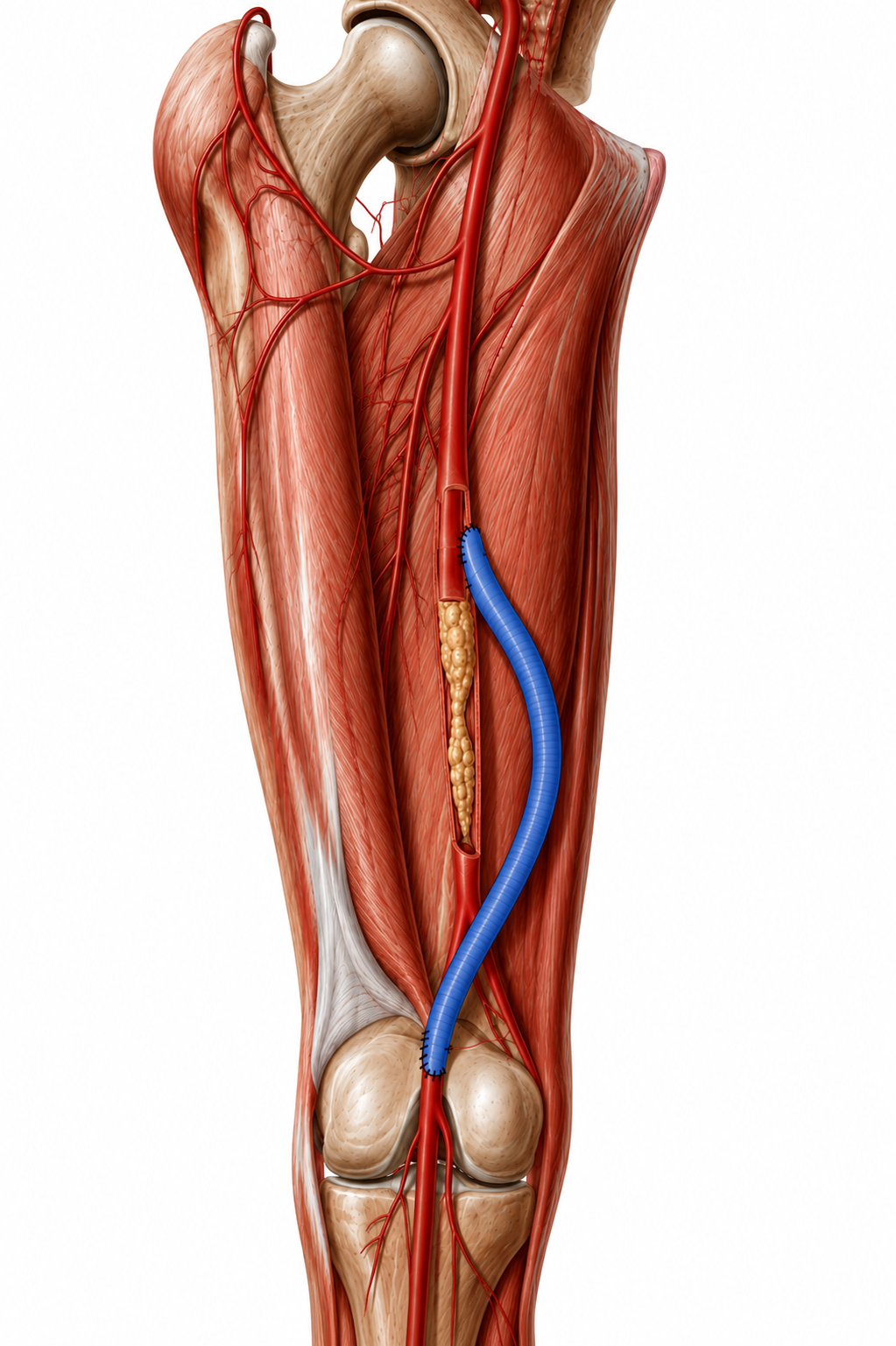
Arterial bypass
When there is an extensive arterial blockage, or certain lesions are not suitable for endovascular treatment, an arterial bypass may be considered.
A bypass creates a new route so that blood can flow around the blocked section of the artery.
The patient’s own vein or a prosthetic graft can be used, depending on the location of the lesion and the characteristics of each case.
In this way, blood can once again reach the tissues of the leg or foot that were receiving an insufficient supply.
Bypass surgery still plays an important role in certain patients, especially when the endovascular technique does not offer a suitable alternative or when it has failed.
Hybrid surgery
In some patients, the most suitable treatment is not simply an endovascular technique or open surgery alone.
Hybrid surgery combines both strategies in the same treatment.
For example, surgery may be performed on one artery and, during the same procedure, another area treated with angioplasty or stenting.
This combination allows treatment to be adapted to each patient’s specific anatomy and to address lesions affecting different arterial segments.
Using endovascular techniques, open surgery and hybrid procedures provides a range of tools to achieve the main goal: improving blood flow to the limb whenever indicated.
Which treatment is right for me?
There is no single technique that is best for every patient.
The choice depends on several factors:
- The location, extent and characteristics of the lesion
- Severity of symptoms and presence of wounds or ulcers
- The patient’s general health
- Previous treatments
- The patient’s goals and preferences
For this reason, before considering an intervention it is important to carry out a complete, personalised vascular study.