
The formation of a thrombus can be related to different factors that promote clotting or impair venous return.
These include:
- Prolonged immobility or hospital stay
- Recent surgery
- Long journeys
- Injuries
- Cancer
- Pregnancy and the period after childbirth
- Personal history of thrombosis
- Some clotting disorders
- Age
- Obesity
Thrombophlebitis
Also called superficial venous thrombosis, this is the formation of a thrombus in a superficial vein accompanied by inflammation of the vein wall. It can appear as a hard, painful, red cord under the skin.
The most common symptoms are:
- Localised pain
- Redness and local warmth
- Inflammation
- Hardening of the affected vein
Although many superficial venous thromboses have a favourable course, some can extend into the deep venous system.
For this reason, especially when they affect certain locations, are extensive or there are risk factors, a Doppler ultrasound may be needed to assess the situation.
Deep vein thrombosis
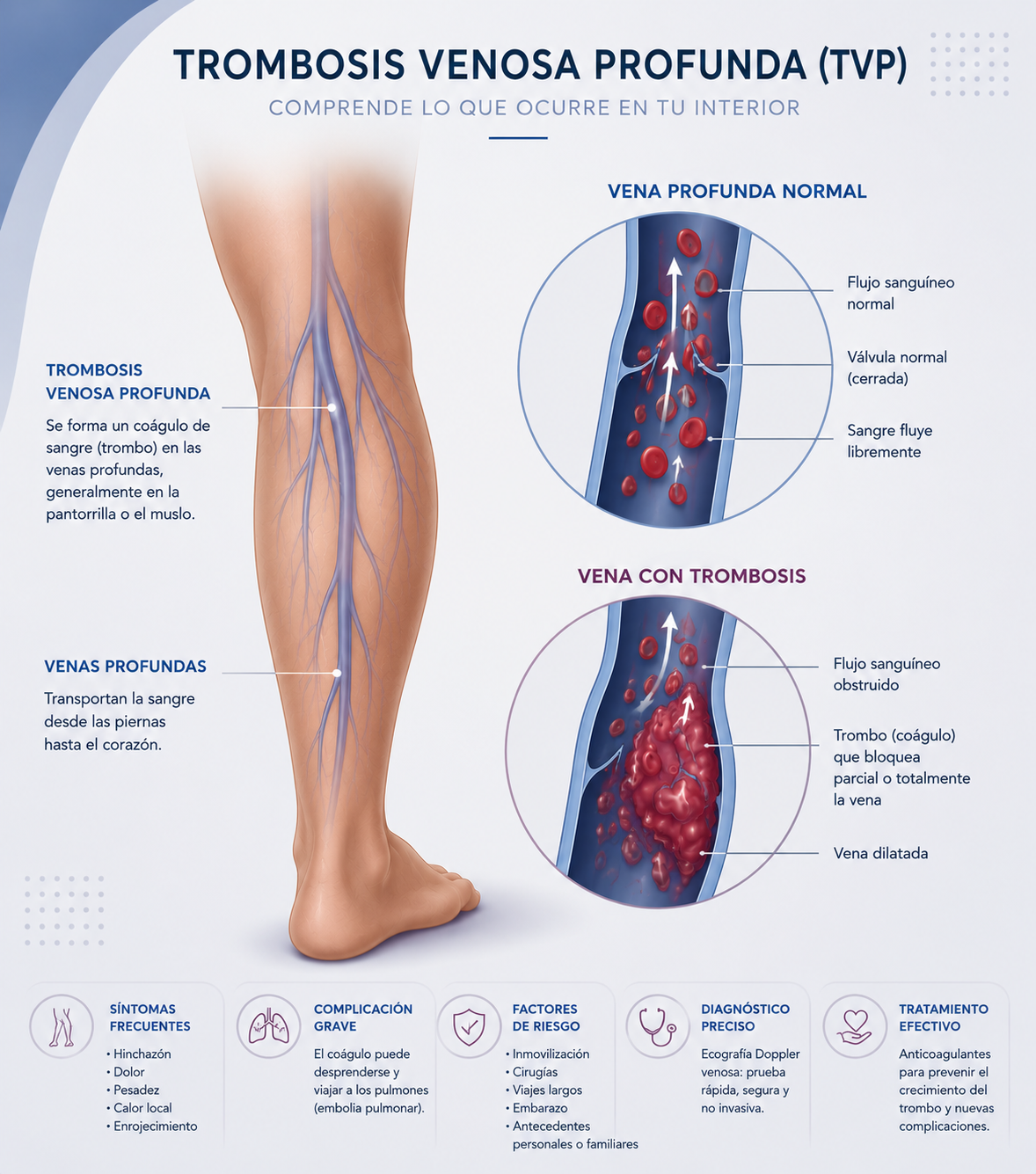
Deep vein thrombosis occurs when a clot forms in a deep vein. Symptoms can vary depending on the location and extent of the thrombosis.
The most common are:
- Swelling of one leg
- Pain or a feeling of tightness
- Increased warmth of the limb
- Redness or changes in colour
- One leg larger in circumference than the other
- Discomfort that may worsen when walking or standing
Suspected thrombosis must be confirmed by a medical assessment and imaging tests, as the symptoms can be similar to those of other conditions.
One of the main and most serious complications is pulmonary embolism, which can occur when part of the thrombus breaks off and travels through the venous system to the pulmonary arteries.
Symptoms that may suggest a pulmonary embolism include:
- Sudden shortness of breath
- Chest pain
- Rapid breathing and cough
- Dizziness or feeling faint
How is thrombosis diagnosed?
Venous Doppler ultrasound
This is a non-invasive technique that allows the veins to be visualised and blood flow to be analysed.
The test determines whether there is a thrombosis and which venous segments are affected. It can also be used later for follow-up in certain situations.
Treatment of venous thrombosis
The treatment of thrombosis depends on several factors, including the location of the thrombus, its extent, the risk of progression and the patient’s characteristics.
In many cases the main treatment is anticoagulant medication, which reduces the blood’s ability to form new clots and allows the body to gradually break down the existing clot.
The length of treatment is not the same for all patients and must be tailored according to the cause of the thrombosis and the risk of recurrence and bleeding.
What happens after a thrombosis?
Although venous thrombosis can resolve with treatment, some patients may be left with permanent changes in their veins.
The venous valves can be damaged, making it harder for blood to return to the heart.
As a result, persistent symptoms may appear or post-thrombotic syndrome may develop.
Post-thrombotic syndrome
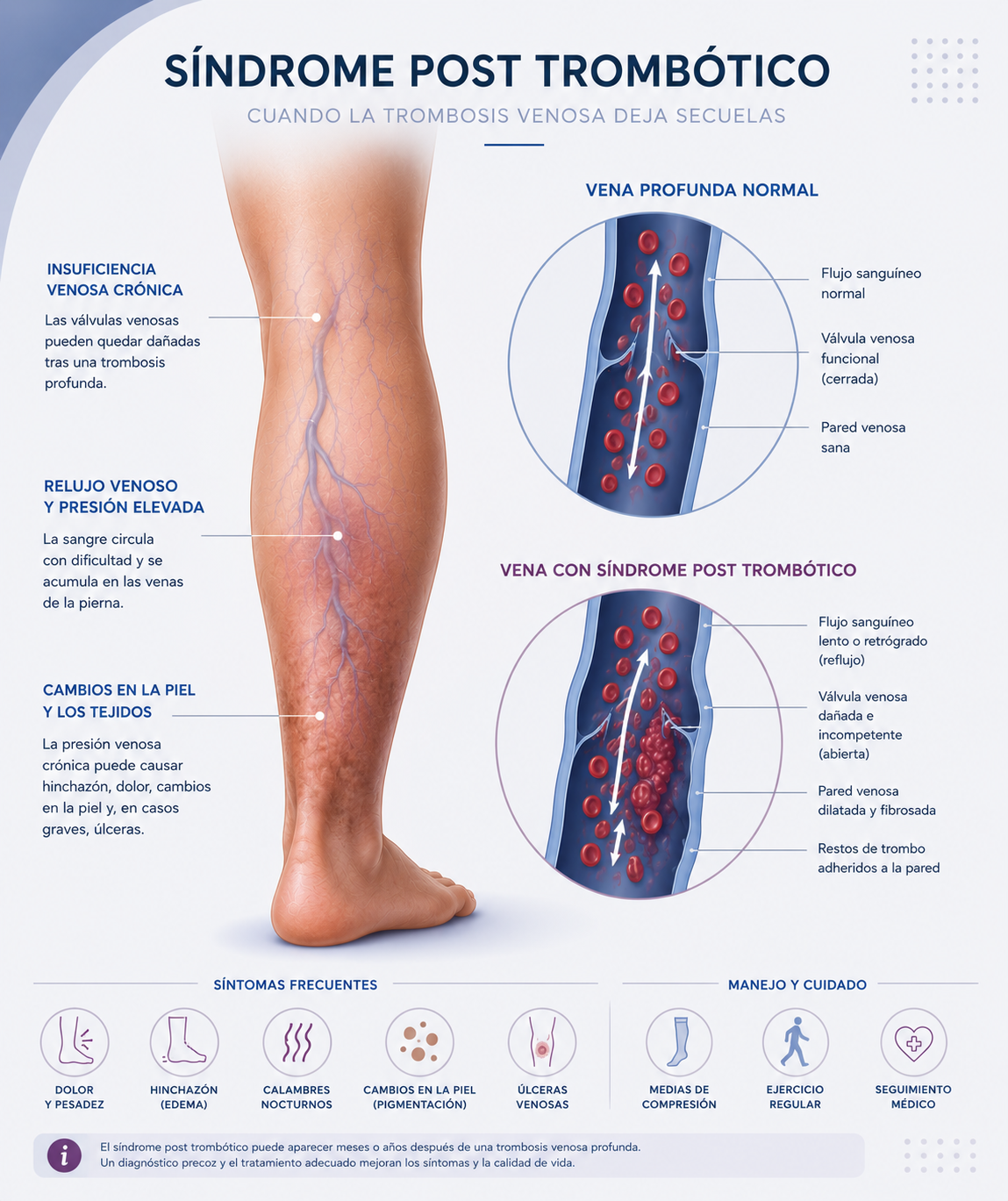
Post-thrombotic syndrome is a complication that can appear after a deep vein thrombosis.
It results from the damage the thrombus can cause to the veins and their valves, as well as from persistent venous blockages.
Symptoms may include:
- Leg swelling
- A feeling of heaviness
- Pain or discomfort
- Tiredness in the limb
- Skin changes
- Varicose veins
- Changes in skin colour
- In more advanced cases, venous ulcers
Symptoms may worsen after standing for long periods and improve when the limb is raised.
When should you see a vascular specialist?
It is advisable to seek advice if you have been diagnosed with venous thrombosis, especially if you have persistent symptoms, a history of thrombosis or a suspected complication.
An individual approach to venous disease
Venous thrombosis can follow a very different course from one patient to another.
In some cases anticoagulant treatment and follow-up are enough. In others, venous blockages, significant symptoms or complications may persist and require specialist assessment.
At Berkelium Surgical Group we study each case individually using clinical examination and the necessary imaging techniques.
Our goal is to identify the cause of the symptoms, assess the state of the venous circulation and determine the most suitable strategy, from medical treatment and monitoring to endovascular techniques in selected patients.