
In some patients these problems are due to incompetent pelvic veins. In others, they may be related to a vein being compressed by nearby anatomical structures, as in May-Thurner or Nutcracker syndrome.
What is pelvic venous disease?
The pelvic veins collect blood from different organs and tissues and carry it towards the central venous system. When venous return is impaired, blood can pool and pressure can rise within the pelvic veins.
This can lead to pelvic varicose veins and cause symptoms that may be persistent or worsen in certain circumstances. Symptoms can include:
- Chronic pelvic pain
- Pain during sexual intercourse
- A feeling of pressure or heaviness in the pelvis
- Discomfort that worsens when standing for long periods
- Pain that may increase at the end of the day
- Varicose veins in the pelvis, vulva or perineal area
- Atypical varicose veins in the legs
- Swelling or discomfort in the legs
Not all patients with these symptoms have pelvic venous disease, so an individual assessment is important.
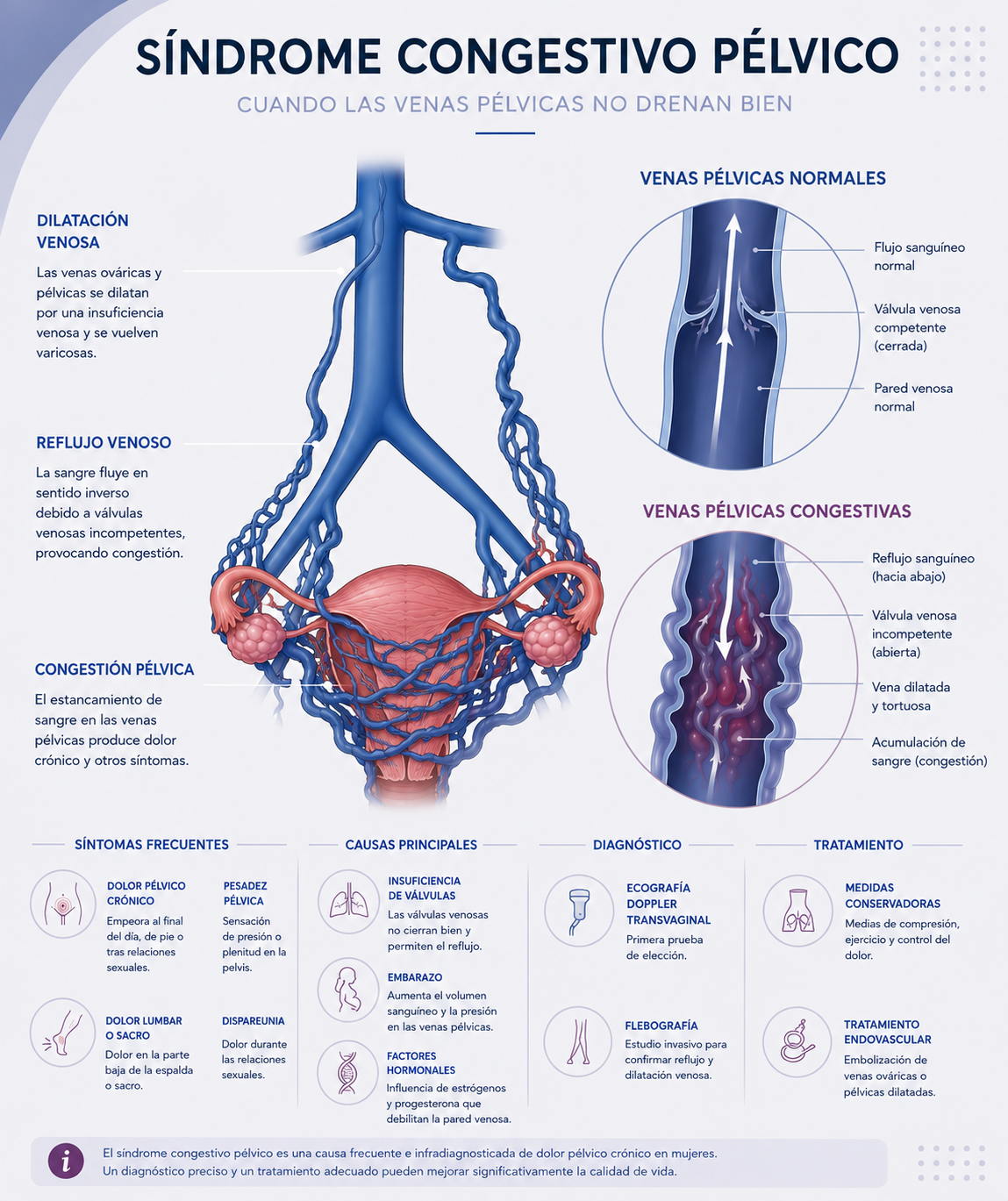
Pelvic congestion syndrome
Pelvic congestion syndrome is related to the presence of dilated pelvic veins and impaired venous return.
It is a possible cause of chronic pelvic pain, especially in women, and may be related to incompetence of certain pelvic veins.
The pain may be constant or intermittent and may worsen after standing for a long time or in certain circumstances.
Diagnosis requires ruling out other causes of pelvic pain and assessing the venous system with imaging tests.
How are they diagnosed?
Diagnosis requires an understanding of the anatomy and function of the venous system.
Depending on the case, different tests may be used:
- Doppler ultrasound
- CT angiography
- Magnetic resonance imaging
- Phlebography
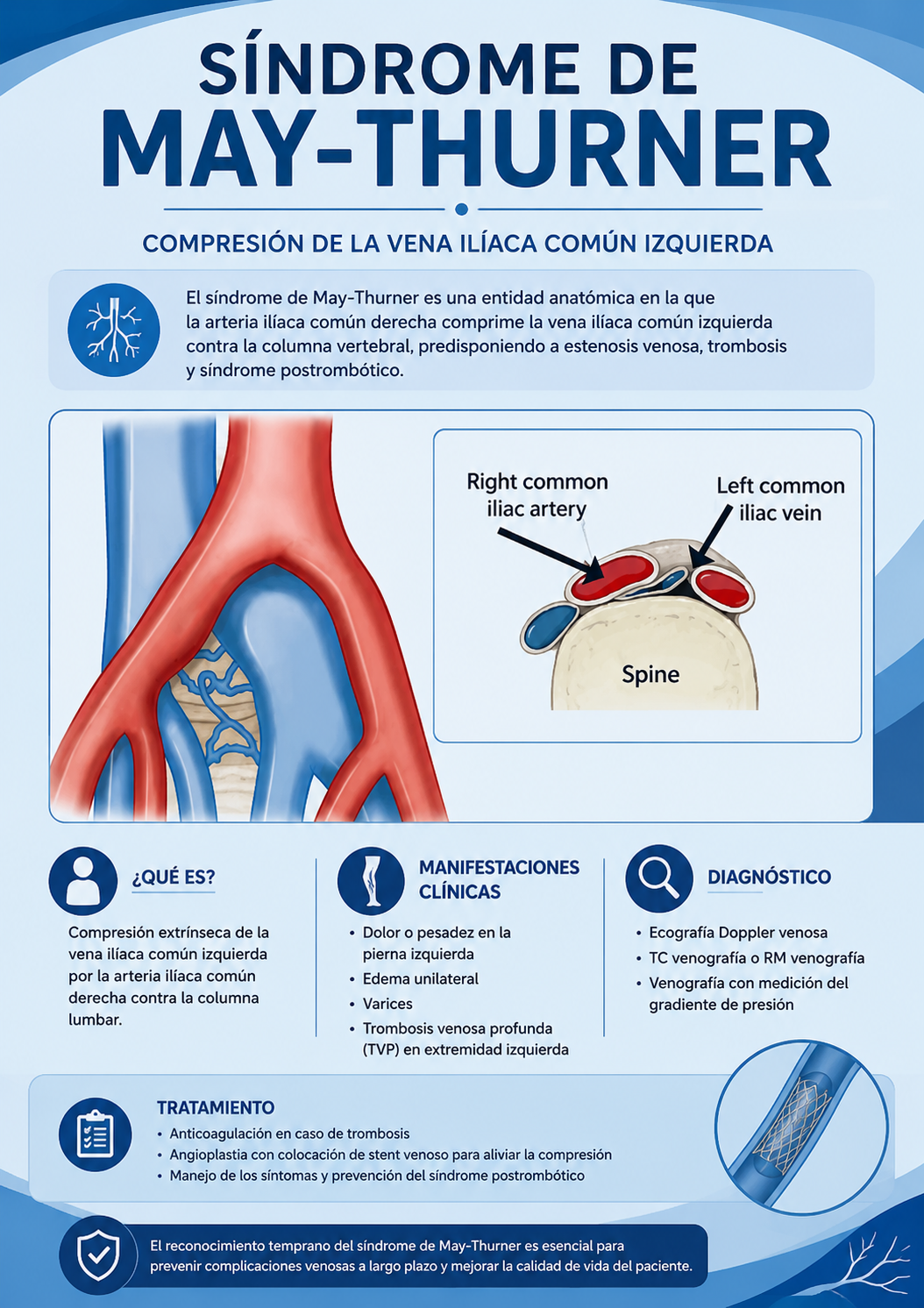
May-Thurner syndrome
May-Thurner syndrome occurs when an artery compresses a vein, usually the left common iliac vein, against the bony structures of the spine.
This compression can impair the return of blood from the leg and lead to symptoms such as:
- Swelling of one leg
- Heaviness
- Pain
- Varicose veins
- A feeling of tightness in the limb
In some patients it can contribute to deep vein thrombosis.
Not everyone with anatomical compression has symptoms or needs treatment. The decision depends on the clinical impact and the characteristics of each case.
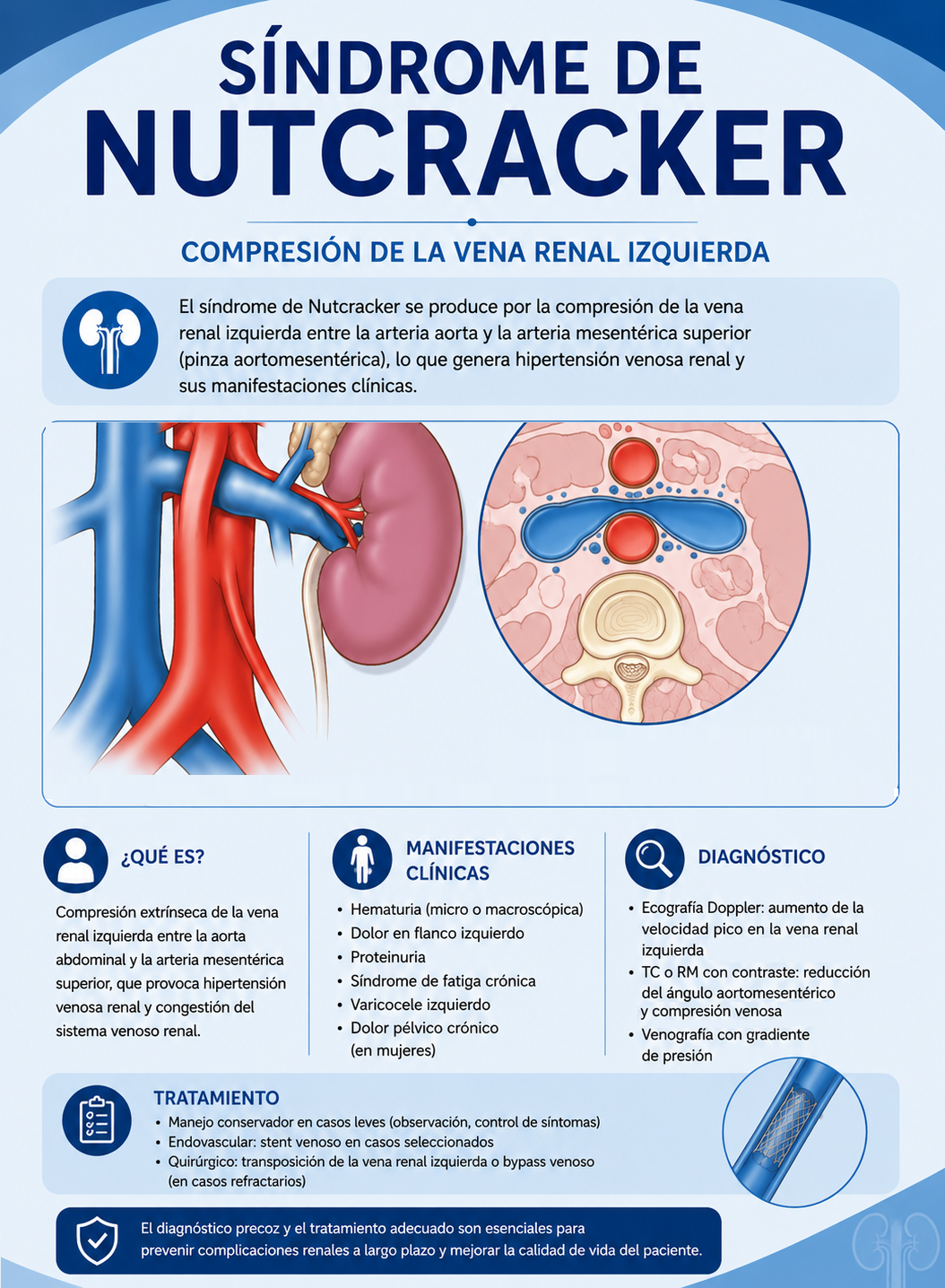
Nutcracker syndrome
Nutcracker syndrome refers to compression of the left renal vein by nearby arterial and anatomical structures.
This can impair venous return from the kidney and, in some patients, be related to pelvic venous congestion and other symptoms.
It can present with:
- Abdominal or lower back pain
- Symptoms of pelvic congestion
- Pelvic varicose veins
- Blood in the urine
Anatomical compression seen on imaging does not necessarily mean there is a clinically relevant syndrome. The findings need to be correlated with the symptoms and assessed by a specialist.
Surgical treatment options
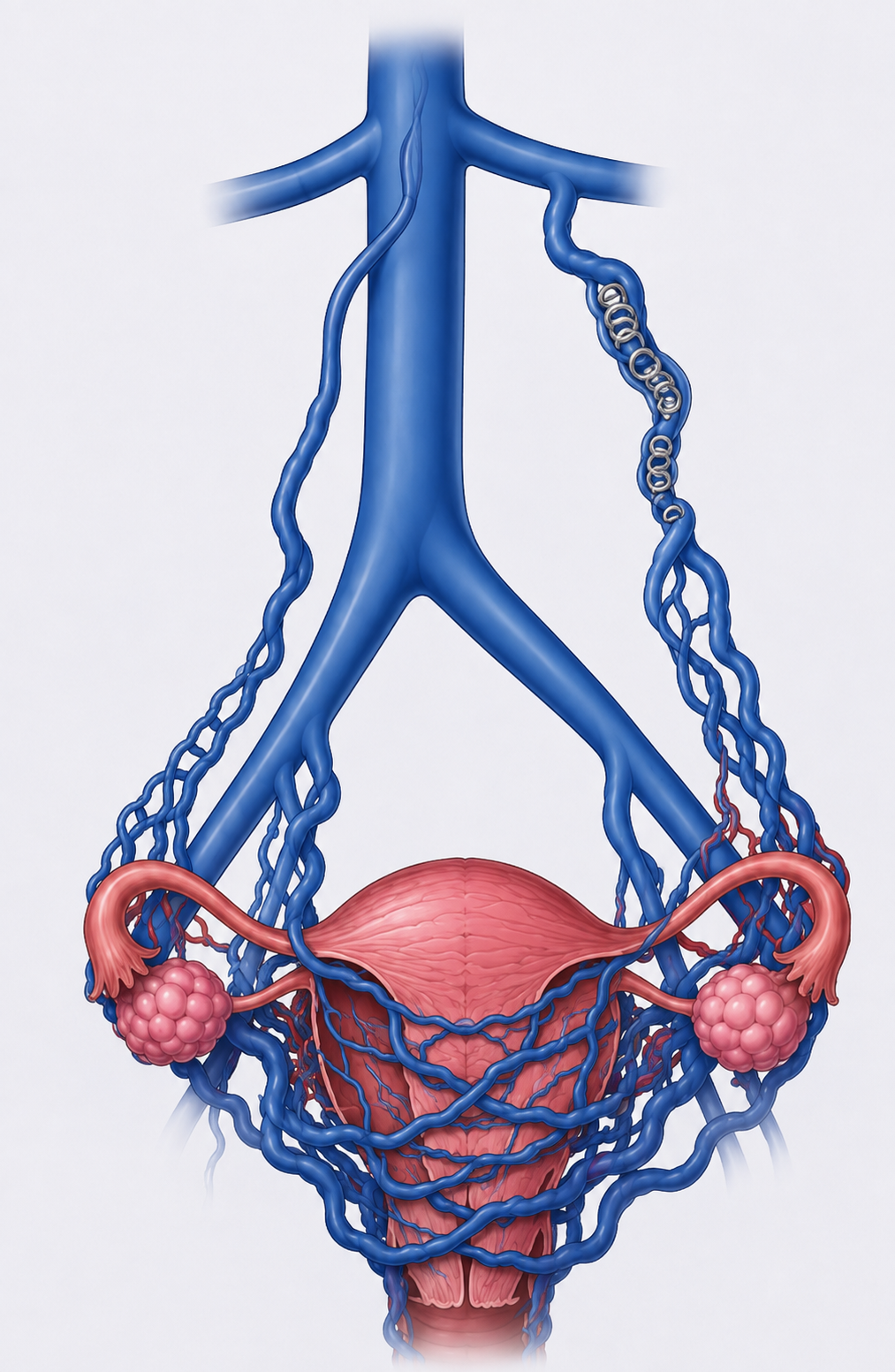
Embolisation
Embolisation is an endovascular technique used to treat certain veins responsible for pelvic congestion.
It is performed through a catheter that is introduced into the venous system and guided to the affected veins.
Once the responsible vein has been located, different materials can be used to close it in a controlled way and reduce the abnormal venous flow.
The aim is to reduce congestion and improve the symptoms related to pelvic varicose veins.
Venous stenting
In some patients there is a venous blockage or compression that impairs the return of blood. When this is significant and there is an appropriate indication, endovascular treatment with a venous stent may be considered.
A stent is a device placed inside the vein to keep the compressed or blocked segment open and help blood flow.
Follow-up after treatment
Follow-up depends on the procedure performed and each patient’s characteristics.
After embolisation it may be necessary to assess how symptoms evolve and check the response to treatment.
In patients treated with venous stenting, regular check-ups are especially important to confirm that the device is working and remains open.
When should you see a vascular specialist?
A specialist assessment is advisable if you have any of the symptoms mentioned.
Pelvic venous disease can be complex and requires distinguishing between anatomical findings with no clinical impact and changes that genuinely explain the symptoms.
Diagnosing and treating pelvic venous disease requires a precise understanding of the anatomy and function of the venous system.
At Berkelium Surgical Group we study each case individually to identify the origin of the symptoms and assess the different treatment alternatives.
When indicated, we offer endovascular techniques such as embolisation of pelvic varicose veins or venous stenting, aiming to improve venous return and provide a solution tailored to each patient.